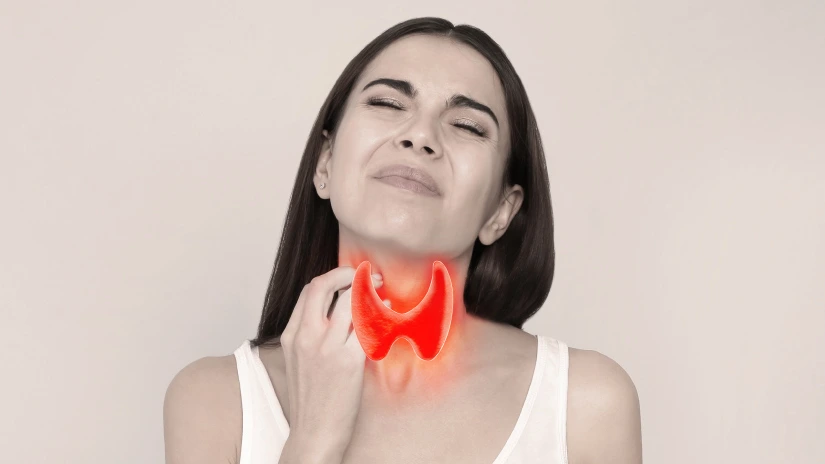
The thyroid gland is a small organ that produces hormones that regulate metabolism and several essential body functions. Located at the front of the neck, just below the throat, the thyroid gland wraps around the windpipe; it’s shaped like a butterfly. Thyroid hormones regulate metabolism, energy production, menstrual health, and several other essential body functions. When thyroid function becomes abnormal, women may experience symptoms that are often mistaken for stress, ageing, or hormonal changes.
When the thyroid gland doesn’t function properly, it affects multiple body systems, leading to a wide range of physical and hormonal symptoms.
Thyroid disorders in women commonly include hypothyroidism, hyperthyroidism, Hashimoto’s thyroiditis, and postpartum thyroiditis. Early detection of their symptoms allows them to receive the necessary therapy and prevent major long-term problems.
Table of Contents
- Introduction
- Causes of Thyroid Problems in Women
- Early Symptoms of Thyroid Disorders
- Diagnosis of Thyroid Conditions
- Treatment Options
- Conclusion
- FAQs
Causes of Thyroid Problems in Women
There are 2 main types of thyroid diseases: Hypothyroidism (underactive) and Hyperthyroidism (overactive). Many different health problems cause these imbalances. Statistics show that women develop these issues more often than men, mainly because of changes in estrogen & progesterone.
Causes of Hyperthyroidism
Overproduction of thyroid hormones drives hyperthyroidism. The following conditions commonly trigger this state:
- Excessive Iodine: An overabundance of iodine in the diet, or from some medication, encourages the thyroid gland to make too much hormone.
- Thyroid Nodules: Non-cancerous lumps or overactive nodules within the gland may also secrete hormones, resulting in an overactive state.
- Graves’ Disease: It is often considered the most common cause of hyperthyroidism. It develops when your immune system mistakenly attacks the thyroid gland, further causing it to produce excessive amounts of thyroid hormone.
Causes of Hypothyroidism
Underproduction of thyroid hormones results in hypothyroidism. Key causes include:
- Iodine Deficiency: Since the thyroid requires a certain amount of iodine to produce hormones, an inadequate supply prevents hormone production.
- Thyroiditis: Inflammation of the thyroid tissue, often causing stored hormones to leak out and eventually leaving the gland underactive.
- Postpartum Thyroiditis: Occurs in some women shortly after giving birth and is a critical period to monitor your thyroid.
- Hashimoto’s Thyroiditis: The most frequent cause of hypothyroidism, Hashimoto’s is a hereditary, painless autoimmune condition where the body’s immune cells attack and slowly damage the thyroid.
Early Symptoms of Thyroid Disorders
Because the
symptoms of thyroid disorders closely mimic signs of stress, ageing, or menopause, women frequently dismiss the early indicators. Pinpointing the exact cause requires careful clinical evaluation. The clinical signs vary dramatically depending on whether the gland is overperforming or underperforming.
Hyperthyroidism Signs in Women
An overactive thyroid speeds up many body functions, leading to symptoms such as:
- Unexplained weight loss despite an increased appetite.
- Heightened anxiety, irritability, and mood changes.
- Nervousness with hand tremors.
- Inability to sleep, chronic insomnia.
- Visible swelling in the neck (goitre).
- Eye irritation, burning sensation; loss of muscle strength and difficulty tolerating heat;
- Menstruation changes, including decreased flow or the absence of menstruation.
Hypothyroidism Signs in Women
When thyroid hormone production decreases and metabolism slows, it may appear as:
- Unexplained weight gain with difficulty losing it.
- Constant fatigue and weakness.
- Poor memory, brain fog, and low mood or depression.
- A hoarse voice with dry skin and thinning hair.
- Increased duration, heaviness, and frequency of menstrual cycles.
- Intense intolerance to cold.
Diagnosis of Thyroid Conditions
Because symptoms of thyroid disorders and other female health issues, such as Polycystic Ovary Syndrome (PCOS) and perimenopause, can be similar, diagnostic testing is essential. Physicians utilise both a clinical exam and laboratory tests to assist in establishing a diagnosis. During a clinical exam, surgeons begin the diagnostic process by examining the patient’s neck for thyroid nodules or enlargement (goitre).
Following the initial check, clinicians typically order imaging studies to further examine the tissue structure. These studies, in conjunction with laboratory tests, ultimately confirm a diagnosis. The laboratory tests analyse the levels of thyroid-stimulating hormone (TSH), free and total T4, free and total T3, antibodies, thyroglobulin, and calcitonin to help determine the nature of the thyroid disorder.
Treatment Options
Treatment of hyperthyroidism and hypothyroidism is determined by individual patient needs upon the diagnosis of the respective endocrine disorder.
Managing Hyperthyroidism
For an overactive thyroid, the clinicians typically choose one of the following treatments:
- Antithyroid Medications: A specific medication to stop the thyroid gland from producing excess hormones.
- Beta-Blockers: These are prescribed to control an overactive heart and anxiety, as well as tremors. These do not affect thyroid hormones.
- Radioactive Iodine Treatment: This is considered a specialised treatment which gradually destroys overactive thyroid tissue to reduce hormone production.
Managing Hypothyroidism
For an underactive thyroid, daily thyroid hormone replacement therapy serves as the standard protocol. This synthetic approach replenishes the missing hormones in the body. Steady compliance with this medication allows women to eliminate symptoms and maintain a standard, healthy lifestyle.
Surgical Interventions
If the thyroid nodule is large, appears cancerous, and causes severe symptoms, surgeons may opt to surgically remove part or all of the thyroid gland. Severity dictates whether surgeons perform a partial or complete thyroidectomy.
Types of Thyroid Surgery
- Lobectomy: When one lobe is affected, it is referred to as a unilateral lobectomy. During a lobectomy, the affected lobe is surgically removed.
- Subtotal Thyroidectomy: The larger part of the gland is removed during the procedure, leaving a small remnant that allows the gland to function to some degree.
- Total Thyroidectomy: A total thyroidectomy is recommended when the thyroid gland is extensively involved by cancer, large nodules, or severe thyroid disease.
Conclusion
Thyroid disorders are pretty common in women and can affect many aspects of health. Because the symptoms often develop gradually and may resemble those of stress, ageing, or other conditions, they are frequently overlooked. Recognising these symptoms and seeking timely medical evaluation may lead to early diagnosis for effective treatment, helping prevent complications. Pay attention to the body’s signals and address concerns promptly to better manage thyroid disorders and support overall well-being.
FAQs
- What steps should a person take upon noticing potential thyroid symptoms?Women experiencing persistent fatigue, unexplained weight changes, menstrual irregularities, or neck swelling should consult a doctor for evaluation. Early diagnosis helps prevent complications.
- What is the expected hospital stay after undergoing thyroid surgery?Most patients leave the hospital either the same day or the morning after the operation.
- How long does the recovery period last after a thyroid operation?Rest is essential for complete recovery, which typically takes one to two weeks. During this time, patients should avoid heavy lifting and gradually return to normal activity after two weeks.
- How much will thyroid surgery in India cost?Standard thyroid surgery in Bangalore costs around Rs. 1,00,000 to Rs. 2,00,000. These are only estimates; you can consult the relevant specialists to obtain the actual costing details.