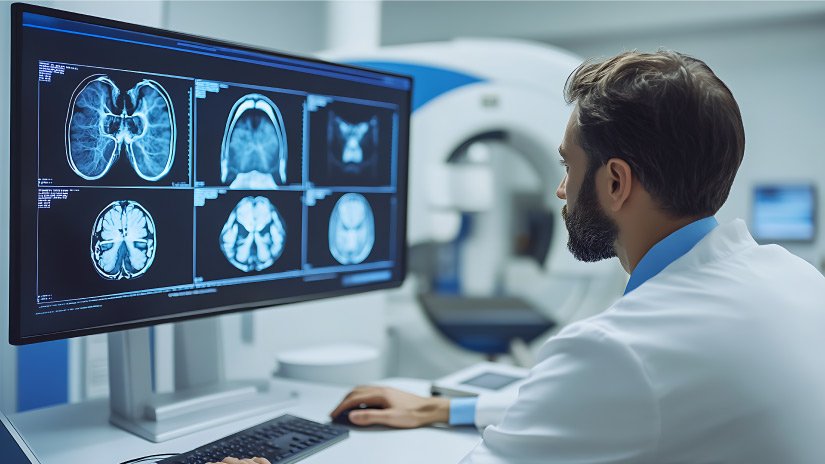
A cancer diagnosis in itself is terrifying to hear, and it only gets more overwhelming when your healthcare providers start using terms you have never heard of before. If your oncologist has told you that you need a PET scan and you do not know what it is, it is natural for you to have questions. A PET scan for cancer is actually one of the most useful tools we have for spotting cancer in patients. Not only that, but it also gives an understanding of how far the cancer has spread and how well the patient is responding to the treatment.
By reading this article, you will have a basic idea about what a PET scan for cancer is, hopefully easing your mind by the end of it.
Table of Contents
- What Is a PET Scan?
- What Can a PET Scan Detect?
- How PET Scans Help With Cancer Staging
- What to Expect During a PET Scan
- Conclusion
- Frequently Asked Questions (FAQs)
What Is a PET Scan?
A PET scan, also known as Positron Emission Tomography, is an imaging test that shows how active your cells are in the body. This is quite different from your normal X-ray scans or a regular CT scan, which can only show the structure and shape of organs and tissues.
A safe, injectable radioactive chemical known as a “radiotracer” is used with a PET scanner. After the chemical is injected into the body through an IV, the scanner is able to detect those cells that absorb large amounts of the radiotracer, identifying a possible risk to the patient’s health. The diseased cells that absorb more radiotracer than healthy cells are called “hotspots”. Once the scanner detects the radiation, images of the affected tissue can be seen.
What Can a PET Scan Detect?
A PET scan can be an extremely useful tool for cancer treatment, as it helps detect:
- If the tumour is active.
- How far the cancer has spread.
- How well the patient is responding to the treatment.
- Whether the cancer has returned.
- Areas that need biopsy.
It is worth noting that a PET scan alone cannot confirm cancer. While it is excellent at detecting areas of trouble, a biopsy is also needed to confirm the diagnosis.
How PET Scans Help With Cancer Staging
Cancer staging helps doctors understand how far the disease has spread in the body, allowing them to tailor treatment to the patient’s needs. A PET scan is extremely beneficial for cancer staging, as it supports the process in multiple ways.
- The full picture: Unlike other imaging tests, a PET scan helps doctors understand exactly what is happening in the patient’s tissues. It can also be used in combination with a CT scan (PET-CT) to get both a detailed structural image and the activity-based image in a single scan.
- Detecting unusual activity in lymph nodes: When cancer spreads, it often spreads to the small lymph nodes first. Unfortunately, this may go undetected during scans at times. Any abnormal activity in the small lymph nodes can be easily detected with a PET scan, enabling early detection and prompt treatment.
- Spotting distant spread: A PET scan can rapidly detect when cancer spreads to organs such as the liver, lungs or bones, even before symptoms have emerged. This is important for appropriate staging of the cancer and to avoid any treatment that may be futile at this stage.
- Guiding treatment plans: If the cancer is staged correctly, oncologists can create a treatment plan that makes the most sense for you, saving time and energy that might be spent on procedures that will not work.
What to Expect During a PET Scan
No matter what, it is always going to feel a bit daunting for any medical procedure, even if it is an imaging test. Knowing what you are getting into can make the entire process easier to bear and help you be prepared for it. Since a PET scan for cancer is a rather straightforward and outpatient procedure, you will be able to go home the very same day.
Before the scan, make sure you:
- Give your doctor information on all the medications you are currently taking.
- Do not eat anything six hours before the scan. Consult with your healthcare provider if you are taking diabetes medication and insulin.
- Only drink water.
- Wear comfortable clothing.
- Do not wear metal accessories.
- If you are claustrophobic, be honest with your doctor beforehand.
During the procedure, the radiotracer will be injected into you through an IV. You will then be asked to sit for an hour as the chemical gets absorbed. Try to sit as still as you can. You will then have to lie down on an examination table, which will be slid into the doughnut-shaped scanner. Do not move too much, as this can cause the images to be blurry. Try to lie still and relax during the scan. In total, a PET scan can take about 2 hours, including the injection and waiting period. The scan in itself may only be 30 minutes.
Conclusion
A PET scan is a highly effective tool that helps doctors gain a better understanding of cancer beyond its location and size. It can also give accurate information on how active the cells are. This helps determine whether the cancer has spread to other organs and how effective the treatment is. This directly shapes the right treatment plan for you.
If your doctor has recommended a PET scan, do not be worried. It is simply a way to get a clearer, more complete picture, which will only ensure that decisions about your well-being are made with confidence and accuracy.
Frequently Asked Questions (FAQs)
- Will a PET scan hurt?
No. The PET scan will not hurt at all. You might feel a little discomfort from the injection, though.
- What is the difference between a PET scan and a CT or MRI?
While CT/MRI scans show the structure and shape of organs and tissues, a PET scan shows how active cells are, which helps assess the likelihood that the area is cancerous.
- Is the radioactive tracer used in a PET scan safe?
Yes. Healthcare providers use only a small amount for the scan, which is generally considered safe for most people. It will naturally leave your body within a day or so.
- Can a PET scan replace a biopsy?
No. A PET scan is excellent at pointing out areas of concern, but a biopsy is still needed to know for sure if the area is cancerous or not.